The game of cricket has never been other than a contest between ball and bat. But nothing is as exciting in an instant as raw pace. The whole stadium freezes when the fastest ball in cricket history leaves the ground and discharges a thunderbolt. The record ball in cricket is not a mere fact. In its place, it is courage, aggression, physical power and the highest skill. It is still being hotly debated by fans and pursued by bowlers.
Speed changes matches. Even the finest batter may be caught off his guard by a fast delivery. Further, it compels errors, generates fear and changes the tide immediately. Due to that fact, pace bowlers are still one of the most useful members in any team.
With this step-by-step guide you will know how speed is measured, who the world record belongs to, who was a contender and what bowlers have been able to accomplish and whether someone can break the record or not.
Why the Fastest Ball in Cricket History Matters
The fastest ball in the world of cricket matters in a number of ways. To begin with, it stipulates the physical boundaries of the sport. Secondly, it motivates the young fast bowlers across the globe. This is most important in terms of how athletic cricket has evolved over the years.
Fastness does not bring wins. But, true speed is stressful. Batters receive reduced reaction time when a bowler is able to repeat 150+ km/h of delivery. Consequently, edges occur more often. Moreover, short balls are more threatening and the yorkers are difficult to defend.
There is psychological advantage also with fast bowling. Experienced batters too are uneasy whenever the ball goes flying past their helmet. As such there is an added mental fight to the technical fight (extreme speed).
How Bowling Speed Is Measured in Modern Cricket
The use of technology is important in determining the fastest ball in cricket history. Sophisticated radar guns are used by broadcasters to determine the speed of the ball once it is released. These machines monitor the speed in the initial few meters of the delivery.
The text is immediately projected on television. This is why the fans are able to see history as it happens. Nevertheless, minor technical failures may take place. This is the reason why the official recognitions are typically by reputable organizations such as the International Cricket Council and record keeping organizations such as Guinness World Records.
The speed measurement was not precise in the past decades. An example is the bowlers of the 1970s who were not necessarily provided with modern radar equipment. This has led to the fact that there are still some slower speeds which are under debate amongst professionals.
The Record Holder: The Fastest Ball in Cricket History
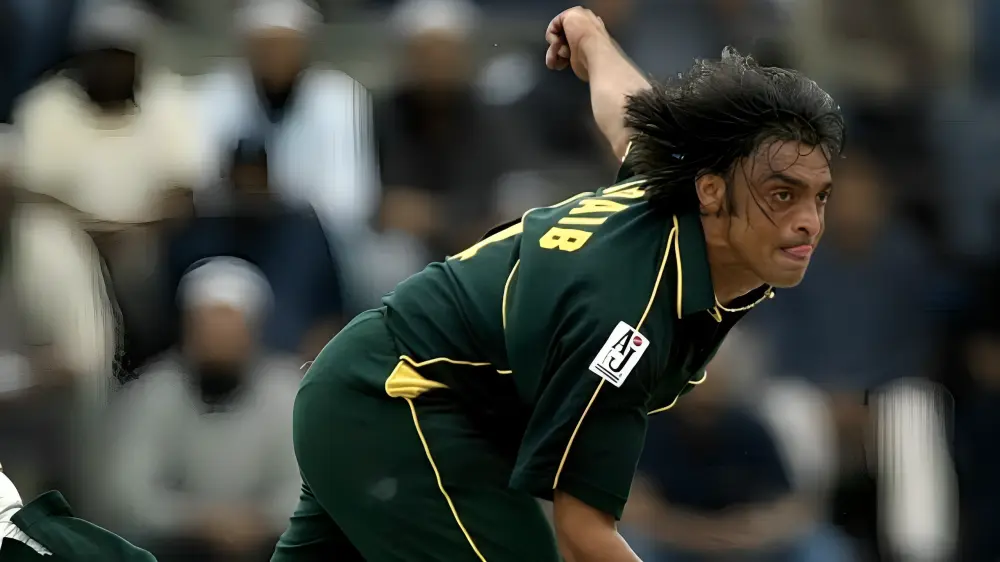
Speaking about the fastest ball in cricketing history, there is an evident name who is the best of the best and that is Shoaib Akhtar.
Akhtar is the Rawalpindi Express and hit a thunderbolt of 161.3km/h (100.23mph) in the 2003 Cricket world cup against England at Cape town. That delivery became the fastest speed ball to have ever been recorded in the history of cricket.
This is the moment that happened in the 2003 Cricket World Cup. The world of the cricketing community responded with shock and enthusiasm. That is the biggest mark that has not been officially overtaken since.
Akhtar used a terrible run-up, explosive, and fearless style. In addition, he always bowled with over 150 km/h during his career. Due to it, he became a legend of the most dreaded pacers in the history of cricket.
Top 5 Fastest Deliveries Ever Recorded
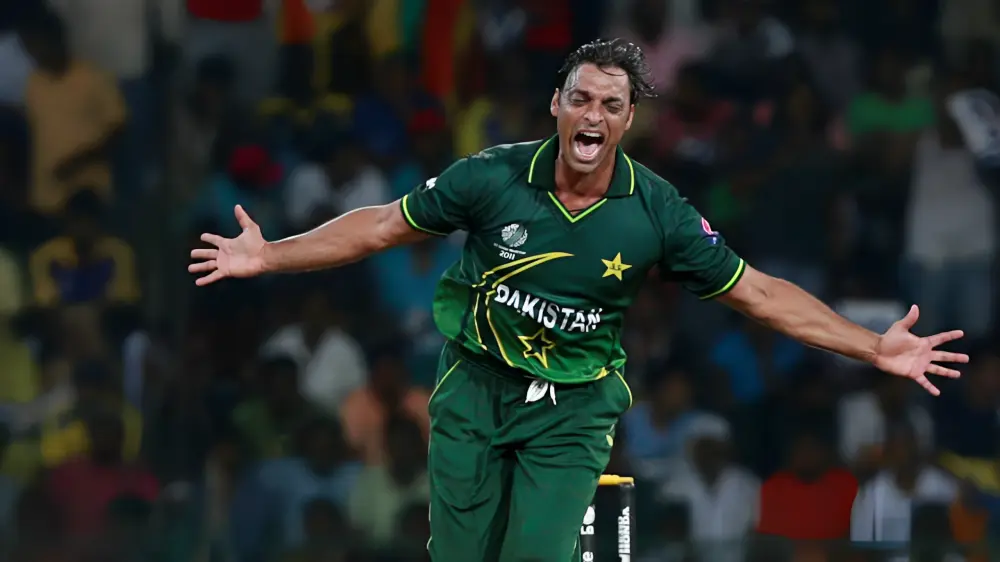
Although Akhtar holds the top spot, several other legendary bowlers have come extremely close. Below is a table of the fastest deliveries officially recorded in international cricket.
| Rank | Bowler | Speed (km/h) | Match Details |
| 1 | Shoaib Akhtar | 161.3 | 2003 World Cup vs England |
| 2 | Brett Lee | 161.1 | ODI vs New Zealand (2005) |
| 3 | Shaun Tait | 161.1 | ODI vs England (2010) |
| 4 | Jeff Thomson | 160.6 | Test vs West Indies (1975) |
| 5 | Mitchell Starc | 160.4 | Test vs New Zealand (2015) |
Let us briefly look at these speed legends.
Brett Lee
In 2005, Brett Lee launched a 161.1km/h rocket. He bowled over 150 km/h on a regular basis and had a tremendous control. Hence, he is regarded by numerous admirers as one of the most all-round fast bowlers of the modern times.
Shaun Tait
Shaun Tait was a lean-throated action man who had an extreme pace. He matched 161.1 km/h in 2010. His speed caused batters to tremble all over the world even though injuries curtailed his career.
Jeff Thomson
The 1970s was the scene of raw aggression by Jeff Thomson. Although it was not the modern radar accuracy, specialists suppose that he always overtook 160 km/h. As a result, he has been one of the quickest bowlers in history.
Mitchell Starc
In 2015, Mitchell Starc reached 160.4 km/h. Moreover, he mixes lethal swing with pace. Due to that fact, he remains cross-format dominant.
Fastest Ball in Cricket History Across Different Eras
The modern era witnessed the fastest ball in the history of cricket. But speed guns are by no means the beginnings of fast bowling. In 1970s and 1980s, West Indian and Australian pacers were frightening the world teams.
At that time, there was a shortage of protective gear. Helmets were not widely used. So, it was even more perilous to have to deal with extreme pace. Bowlers such as Jeff Thomson and Michael Holding gave frightening speeds though no exact numbers are agreed upon.
Modern players on the other hand are enjoying the advantage of sports science, gym training and biomechanical analysis. This makes the modern day pacers develop tougher bodies and perfect their activities scientifically.
Modern Speed Demons in International Cricket
Although the current world record of fastest ball in the history of cricket is still in the hands of Shoaib Akhtar, the contemporary bowlers keep on pushing the limits.
Anrich Nortje has been crossing 156157km/h in international matches in recent matches. On the same note, Lockie Ferguson is a stabilizer with more than 150km/h. Furthermore, Jofra Archer also impressed fans in the 2019 world cup through express pace.
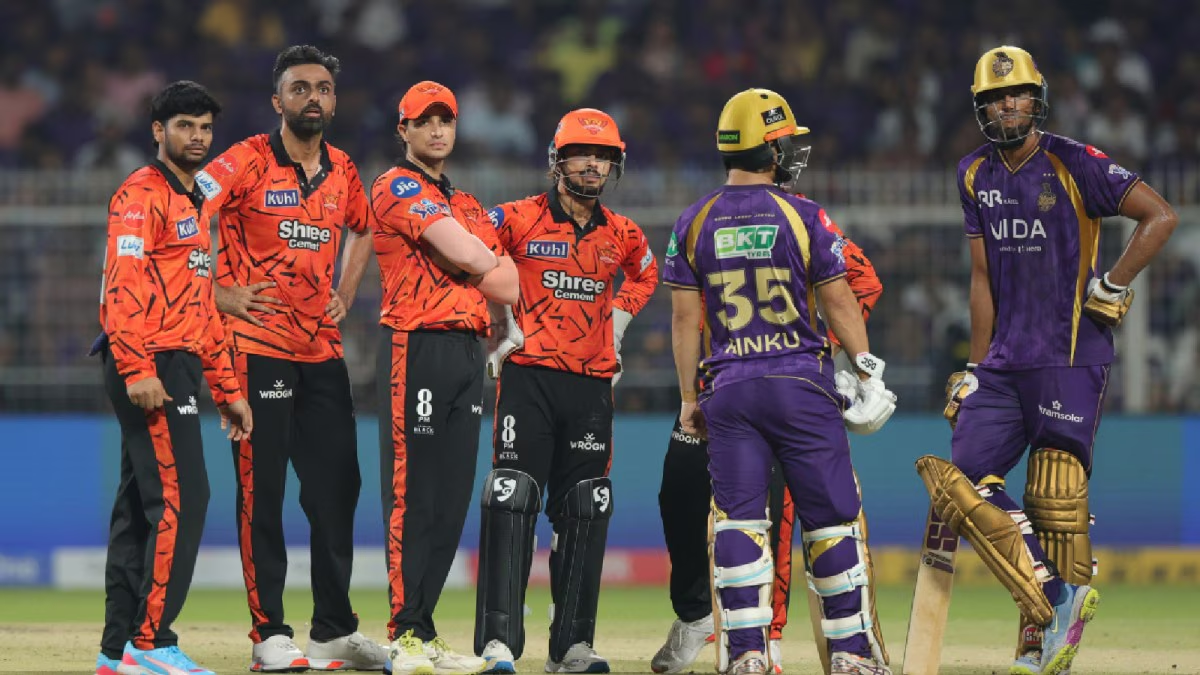
In the franchise tournaments such as the Indian premier league, the speed gun is often lit by high speed deliveries. T20 cricket requires bowlers to be aggressive and thus the fast bowlers burst with explosive speed.
Can Someone Break the Fastest Ball in Cricket History Record?
A lot of fans are left wondering whether anybody can go beyond 161.3 km/h. On a scientific level, it is extremely difficult. Knees, ankles and shoulders are under enormous pressure with Bowling this speed. Consequently, there is a high potential of injury.
Nevertheless, training of sports has changed. The strength conditioning, rehabilitation programs, and the analysis of biomechanics is still being enhanced. This makes the young fast bowlers smarter than the earlier generations.
Nevertheless, it will take any exceptional ability, excellent skill, and great physical condition to cover over 162 km/h. Few bowlers in the history have even reached 160 km/h. That in itself demonstrates the level of difficulty of the record.
Why Extreme Pace Is Rare
Extreme pace requires:
- Explosive leg strength
- Strong core muscles
- Flexible shoulders
- Perfect timing at release
- High endurance
In addition, the speed bowers should be accurate. Uncontrollable speed becomes useless. Hence, numerous teams are more interested in having bowlers with a working range of 145-150 km/h that are precise than one who has high record speed.
Also, stress fracture and muscle injuries are associated with repeated high-speed bowling. This has led to workloads being managed well in contemporary cricket by teams.
Psychological Impact of the Fastest Ball in Cricket History
The fastest ball in cricket history symbolizes fear and dominance. Even today, batters prepare mentally before facing express pace. Reaction time reduces dramatically above 150 km/h. Therefore, even minor misjudgment leads to dismissal.
Crowds also respond differently to speed. When the speed gun flashes 150+, the stadium roars instantly. Consequently, fast bowling becomes a spectacle beyond simple statistics.
Final Thoughts
The fastest ball in cricket history remains one of the most exciting records in sport. Shoaib Akhtar’s 161.3 km/h rocket during the 2003 World Cup still stands as the official highest speed ball in cricket.
Although several legends such as Brett Lee, Shaun Tait, Jeff Thomson, and Mitchell Starc came close, none have broken the record yet. Meanwhile, modern pacers like Anrich Nortje and Lockie Ferguson continue chasing that magical number.
Ultimately, pace will always thrill cricket fans. Records may eventually fall. However, the love for raw speed will never fade. Every time a fast bowler sprints in, you secretly hope to witness history again. And perhaps one day, someone will finally deliver a ball faster than 161.3 km/h.
Read More BlogsL :- Most Dangerous Batsman in IPL – Power, Fearlessness, and Match-Winning Impact