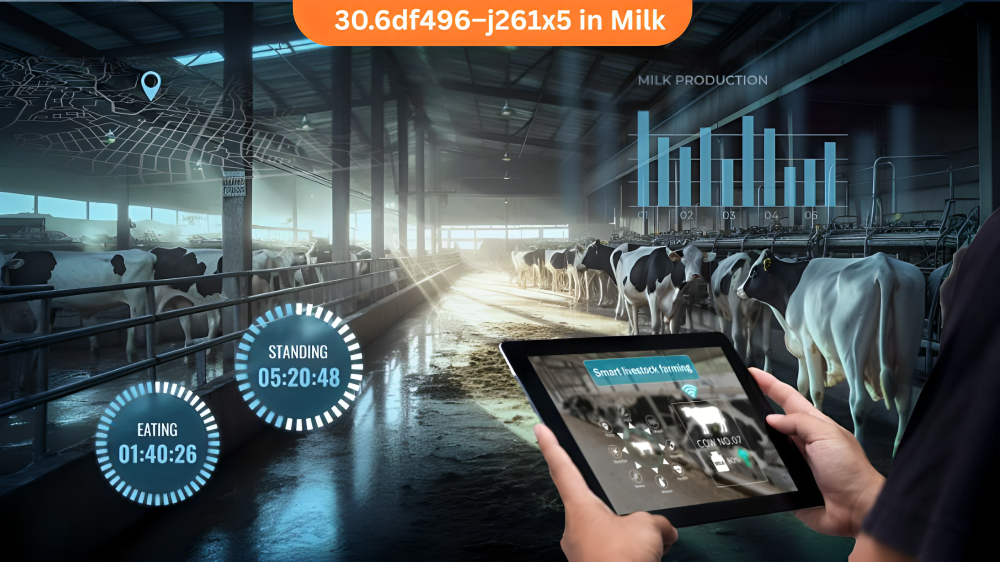
Milk is part of everyday life. People drink it daily. Families rely on it for nutrition. Because milk is consumed so widely, even small quality issues matter. This is why the dairy industry depends on structured monitoring systems. One such system revolves around 30.6df496–j261x5 in milk , a coded reference used to maintain clarity and consistency during quality assessment.
This identifier is not designed for consumers. It supports professionals who handle testing, storage, and compliance. By using a compact reference instead of long descriptions, the dairy process becomes faster and more reliable. Over time, this approach has become a foundation of modern quality control.
What Is 30.6df496–j261x5 in Milk?
Understanding this identifier removes much of the confusion around dairy quality tracking. Many assume such codes are random. That assumption is incorrect. 30.6df496–j261x5 in milk is a structured technical marker used during laboratory testing. It allows multiple quality observations to be recorded under one unified reference. This prevents repetition and keeps reports easy to read. The code may represent freshness stability. It may also reflect compositional balance or handling conditions. Instead of listing every metric separately, professionals rely on this identifier to summarize results clearly.
Why Milk Quality Monitoring Matters So Much?
Milk is highly sensitive. Temperature changes affect it quickly. Storage conditions influence its safety. Handling practices also play a role. Quality monitoring exists to protect consumers. It also protects producers from losses. Systems like 30.6df496–j261x5 in milk help identify problems before they escalate. Without structured monitoring, inconsistencies increase. Errors spread faster. Standardized codes reduce that risk and support dependable outcomes.

How 30.6df496–j261x5 in Milk Supports Laboratory Operations?
Laboratories work under time pressure. They test large numbers of samples daily. Manual documentation slows this process. Using 30.6df496–j261x5 in milk simplifies record keeping. One identifier replaces long notes. This improves speed and reduces interpretation mistakes. The code also supports comparison. Past results remain aligned with present ones. Trends become easier to identify. Long-term quality evaluation becomes more accurate.
Key Quality Elements Encapsulated in the Code
Although compact, the identifier represents several important aspects. Each aspect contributes to overall milk quality. Freshness indicators remain central. Nutritional balance also matters. Stability during storage adds another layer. By grouping these elements, 30.6df496–j261x5 in milk ensures no factor is overlooked. The system promotes completeness without complexity.
The Role of Dairy Farmers in Quality Tracking
Quality control does not begin in laboratories. It begins at farms. Farmers depend on test results to guide decisions. When results appear in a coded format, interpretation becomes easier. 30.6df496–j261x5 in milk allows farmers to understand outcomes without needing technical translation. This clarity improves handling practices. Storage improves. Waste reduces. Productivity stabilizes over time.
Advantages of Standardized Coding for Farmers
Clear data strengthens decision-making. Farmers benefit when information arrives in a consistent format. Practical advantages include:
- Faster understanding of lab feedback
- Reduced confusion during reviews
- Improved traceability across batches
- Better long-term planning
These benefits create stronger operational control.
Consumer Trust and Product Confidence
Consumers expect safe milk. They may never see backend systems, but they experience the results daily. Structured tracking ensures consistent quality. Codes like 30.6df496–j261x5 in milk support reliability without exposing technical complexity. Trust builds when quality remains predictable. Brands benefit from consistency. Long-term confidence grows naturally.
Technology Integration in Dairy Quality Systems
Modern dairies rely heavily on automation. Sensors measure temperature. Machines analyze composition. Software stores results. Identifiers integrate smoothly into this environment. 30.6df496–j261x5 in milk fits into digital systems without manual adjustment. Human error decreases. Accuracy improves. Processing becomes faster and more reliable.
Manual Records vs Coded Tracking Systems
Before modern coding, documentation relied on handwritten or typed notes. This approach created variability. Coded systems standardize information. They reduce confusion. They improve traceability. Below is a clearer comparison to highlight this difference.
Before viewing the table, consider how structure impacts efficiency and accuracy.
| Aspect | Manual Records | Coded Tracking |
| Speed | Slower | Faster |
| Error Rate | Higher | Lower |
| Data Consistency | Variable | Stable |
| Scalability | Limited | High |
| Long-Term Analysis | Difficult | Simple |
This shift explains why coded systems dominate modern dairies.
Understanding 30.6df496–j261x5 With Water
Quality systems also rely on calibrated environments. Water plays a key role in testing and equipment accuracy. 30.6df496–j261x5 with water refers to a structured calibration reference. It ensures measurements remain consistent when water interacts with testing systems. Water reacts differently under changing conditions. Temperature and environment matter. Standardization becomes essential.

Why Water Calibration Needs Structured References?
Even minor measurement errors can distort results. Precision remains critical. By using 30.6df496–j261x5 with water, professionals reduce uncertainty. The code defines exact calibration expectations. Repeatability improves. Results remain dependable across time and locations.
How the Water-Based Reference System Functions?
The process follows a clear structure. Each step supports accuracy. First, professionals identify the required reference. They apply the correct water configuration. Testing follows under controlled conditions. If results differ, adjustments occur. The code ensures clarity throughout the process.
Practical Applications of 30.6df496–j261x5 With Water
This reference appears in multiple technical environments. Common uses include:
- Laboratory calibration procedures
- Engineering system testing
- Industrial mixing operations
- Digital simulation environments
Each application depends on consistency.
Benefits of Structured Water Calibration
Standardized calibration improves reliability. It also saves time. Key benefits include:
- Higher measurement accuracy
- Reduced setup errors
- Faster verification processes
- Safer testing conditions
These advantages support long-term operational stability.
Relationship Between Milk Testing and Water Calibration
Milk testing equipment depends on accurate calibration. Water plays a supporting role. Because of this, 30.6df496–j261x5 in milk and 30.6df496–j261x5 with water operate together within quality systems. Both rely on structure. Both reduce variability. Their coordination improves overall accuracy.
Long-Term Data Storage and Quality Trends
Quality control extends beyond individual tests. Historical data matters. Coded identifiers simplify storage. Records remain searchable. Patterns become visible. This supports continuous improvement. Weak points surface clearly. Processes evolve steadily.
Stakeholder Benefits Across the Supply Chain
Structured quality systems benefit everyone involved. Before reviewing the table, note how shared standards improve collaboration.
| Stakeholder | Core Benefit |
| Farmers | Clear test feedback |
| Laboratories | Faster documentation |
| Producers | Consistent quality |
| Consumers | Safer products |
| Regulators | Easier compliance |
This alignment strengthens the entire industry.
Conclusion About 30.6df496–j261x5 in Milk
30.6df496–j261x5 in milk represents a disciplined approach to dairy quality management. It condenses complex testing data into a clear and reliable reference. When supported by calibration frameworks like 30.6df496–j261x5 with water, it ensures consistency across technical environments. Together, these systems help maintain safety, accuracy, and trust throughout the dairy supply chain.
Read More